Botanical Survey & Ecological Data Visualisation
Your surveys generate excellent data. But static reports and spreadsheets don't let stakeholders explore it themselves. I build interactive applications that turn botanical and ecological datasets into tools decision-makers can interrogate.
Combining field ecology with R-based data development to make complex ecological data accessible, transparent, and useful.
Ecology-aware data tools that work in practice
I'm Richard Friend — a FISC Level 5 field botanist and R developer with five years' experience on national monitoring programmes for UKCEH, Natural England, and Welsh Government. I've collected data under bespoke protocols in the field, worked with data at scale, and have seen how organisations use ecological evidence in strategic planning.
That perspective matters. Conservation organisations often commission excellent surveys, but the results end up locked in spreadsheets or static reports. When decision-makers can't explore the evidence themselves, data can struggle to influence strategy, funding applications, or long-term planning.
I specialise in bridging that gap. I design interactive tools that translate ecological data into something stakeholders can interrogate, understand, and trust — without requiring technical expertise or waiting for custom outputs.
One example: over 30,000 botanical records were underused because a charity's stakeholders couldn't access them meaningfully. The interactive map I built changed how the organisation communicates its work and engages stakeholders with the data. I build similar tools for organisations facing the same challenge.
Availability: development projects October–April, with capacity for smaller projects year-round.
Making survey data visible, credible, and useful
The problem: Survey datasets typically contain insights beyond what's presented in a static report. When decision-makers can't explore the evidence themselves, the data often fails to inform strategic decisions as effectively as it could.
The difference:
Static outputs (typical survey deliverables):
Interactive applications:
The solution: Custom interactive applications built by someone who understands ecology, data, and how organisations use evidence. I work with you to turn survey datasets into tools that:
Typical delivery:
This approach is most valuable when:
Reducing reporting burden: For multi-year monitoring programmes or funded projects, building visualisation into your initial funding application creates infrastructure that automatically generates interim reports and funder updates. This typically saves significant staff time and reduces the stress of producing custom outputs for each reporting cycle.
Preserving institutional knowledge: Survey data often represents years of fieldwork, but when staff move on, the context and patterns they understood are lost. Interactive visualisation preserves this spatial and temporal knowledge in an accessible form, allowing new team members to understand site history and make informed management decisions without relying on individual memory.
Turning datasets into tools organisations actually use
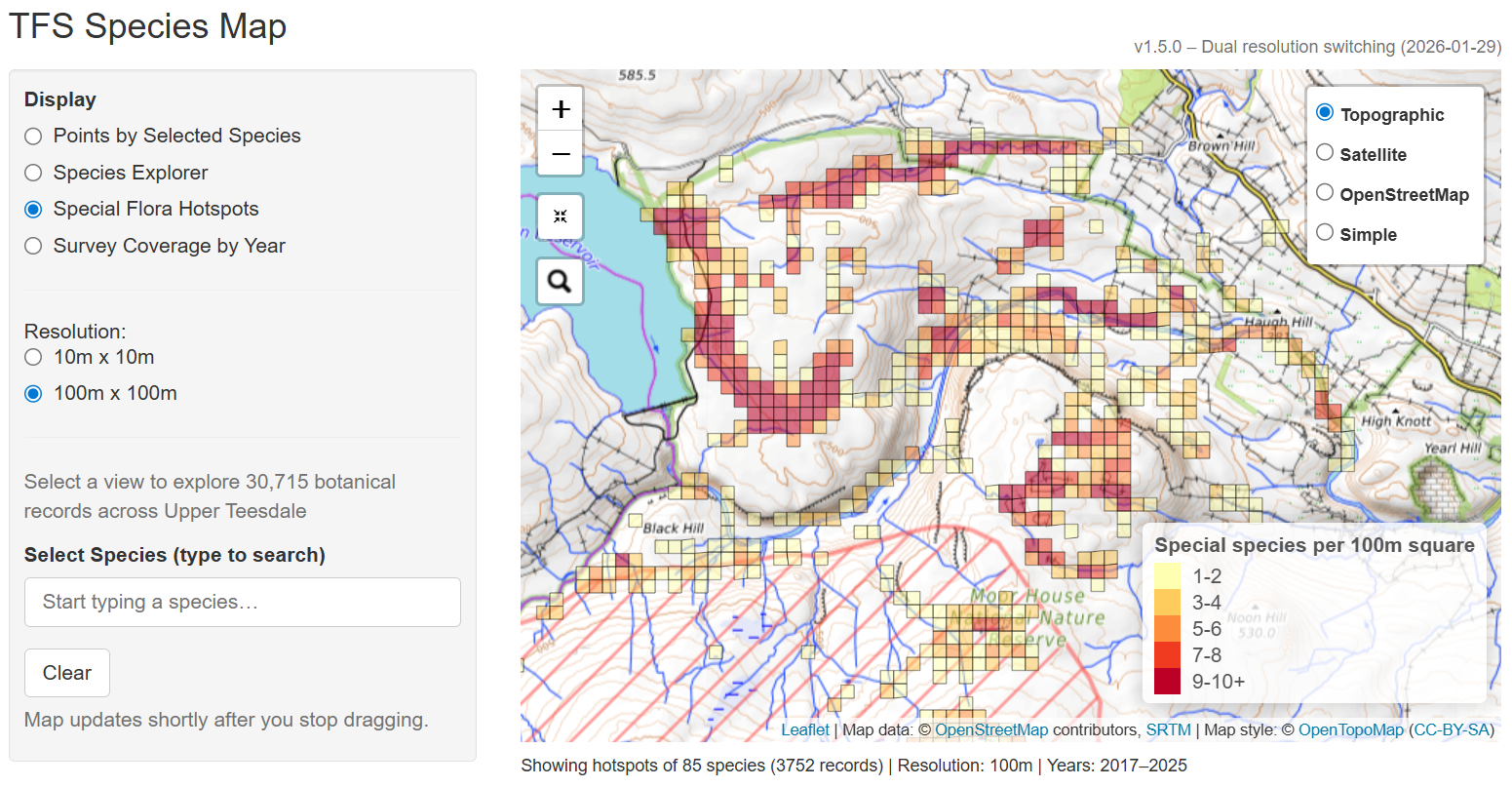
30,000+ records (2017–2025)
Challenge: Nine years of botanical data (30,000+ records) in spreadsheets. Stakeholders couldn't explore patterns in this important dataset and had to wait for custom outputs to understand species distribution and community hotspots.
Outcome: An interactive tool now lets anyone filter by species, plant community, species richness at multiple grid resolutions, or by survey area. New data can be incorporated without rebuilding the entire application.
Launch Tool
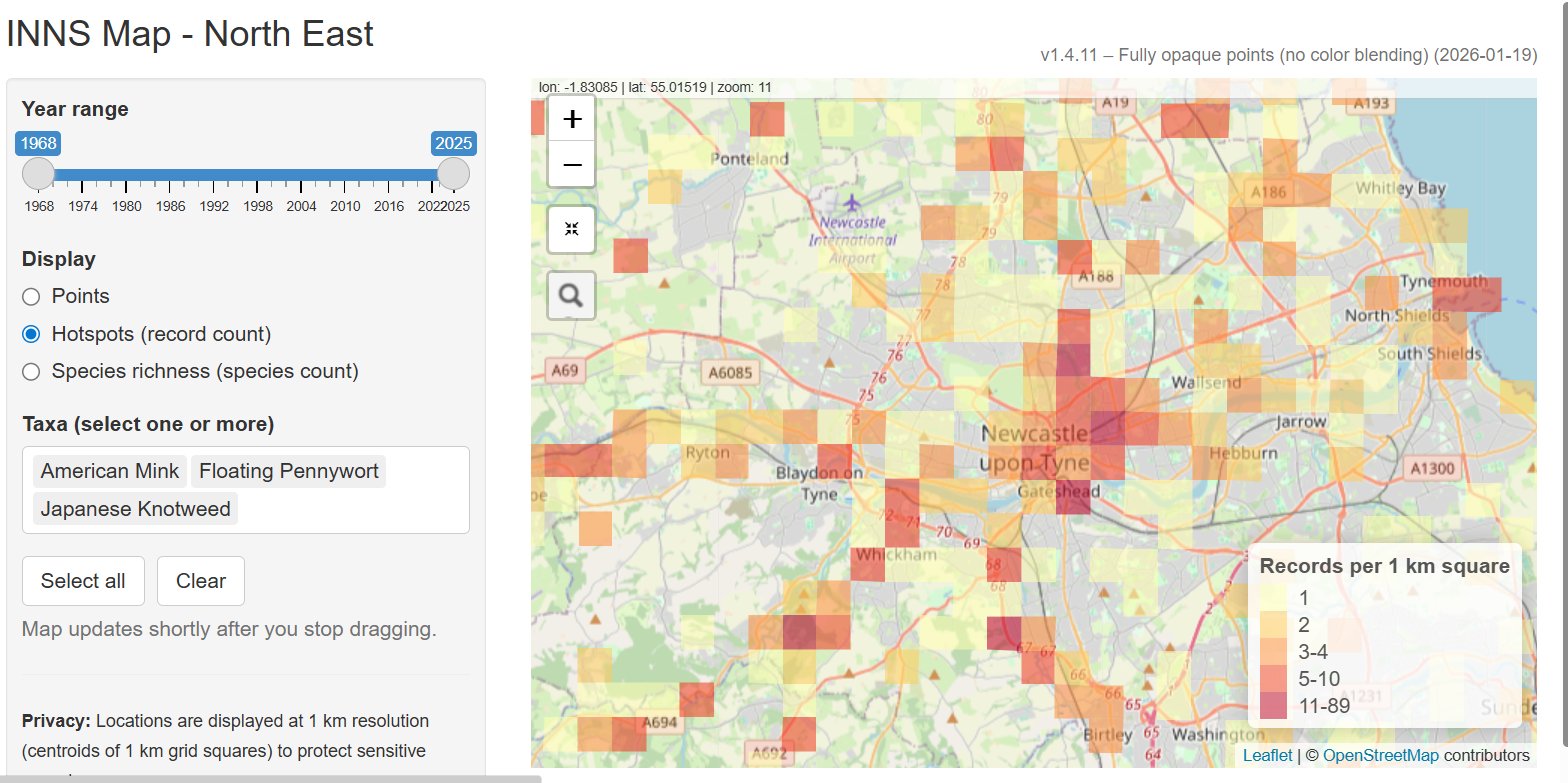
Commissioned by Environmental Records Information Centre North East
Challenge: Need for a clear, public-facing tool to engage stakeholders with invasive non-native species data.
Outcome: An interactive mapping application with species richness heatmaps and filterable records, successfully deployed on ERIC's website.
Launch ToolSupporting skills development in the field
Field identification skills are essential for ecological surveys. These interactive learning tools address common identification challenges with progressive reveal functionality, diagnostic images, and mobile-optimised interfaces that support learning anywhere.
Collaborative BSBI project supporting its Identiplant course through interactive identification tools and structured learning.
Launch ToolOriginally developed for Natural England's England Ecosystem Survey; now a public training resource supporting surveyors learning key indicator species.
Launch ToolA self-directed learning resource addressing common identification challenges, designed for use on mobile devices.
Launch ToolUnderstanding the context behind the data
My development work is grounded in extensive field experience and practical survey delivery:
This ensures the tools I build reflect real survey workflows, data structures, and constraints — not abstract technical assumptions.
I typically work with:
If you're sitting on a dataset that isn't informing decisions, strategy, or funding conversations, it's probably worth a discussion.
Richard Friend
Blackdene Consulting Ltd
Dene House, West Blackdene
Bishop Auckland
County Durham, DL13 1EQ